From Data Collection to Decision-Making: How IoT Automation Closes the Gap

Table of Contents
- Introduction
- Why Data Collection Alone Is Not Enough
- How IoT Automation Creates an Actionable Data Flow
- The Role of Rules in IoT Decision-Making
- From Alerts to Coordinated Operational Response
- Business Outcomes Enabled by IoT Automation
- Where IoT Automation Delivers Practical Value
- Building a Smarter Decision-Making with thingZmate®
Introduction
Connected devices generate continuous operational data from machines, buildings, farms, utilities, vehicles, and distributed assets. However, collecting more data does not automatically result in better decisions. Manual monitoring can cause important changes to be missed or addressed too late. IoT automation connects live data with rules, alerts, workflows, and predefined actions. It helps organizations move from observing operations to responding quickly and consistently.
Why Data Collection Alone Is Not Enough
Sensors can track temperature, pressure, humidity, energy, equipment status, location, water level, and other parameters. Yet individual readings provide limited value when they remain isolated or difficult to interpret. Teams may still need to monitor dashboards, compare values, contact employees, and initiate actions manually. A useful IoT system must therefore do more than collect and display information.
- Detect meaningful changes in operating conditions
- Compare readings with predefined rules
- Identify abnormal behaviour
- Separate urgent events from routine updates
- Notify the appropriate users
- Trigger actions without unnecessary delay
- Escalate unresolved events
- Record events for future analysis
- Support consistent decisions across locations
How IoT Automation Creates an Actionable Data Flow
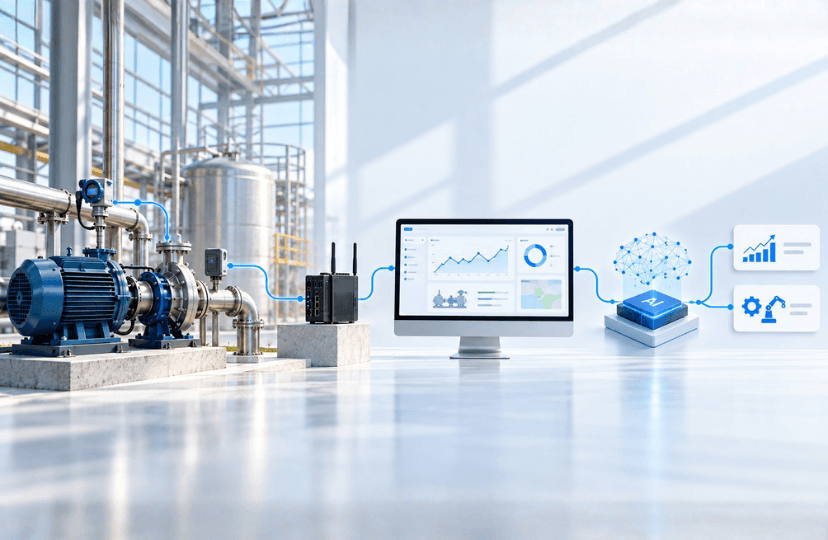
IoT automation connects devices, operational data, business rules, and actions within a continuous workflow. Each reading is evaluated according to its operational context instead of being treated as an isolated value. The platform can then determine whether the condition is normal, unusual, or critical. This creates a structured path from event detection to operational response.
A Typical Automated IoT Workflow
- A connected device sends real-time data
- The platform validates and processes the reading
- A rule evaluates the value or device status
- The condition is classified by priority
- The relevant user receives an alert
- A configured action or workflow begins
The Role of Rules in IoT Decision-Making
Rules give operational meaning to the data received from connected devices. They define which conditions require attention and what should happen when those conditions occur. A rule may evaluate a threshold, schedule, device state, trend, duration, or combination of events. Well-designed rules reduce the need for continuous human observation.
From Fixed Limits to Operational Context
A temperature of 55°C may be acceptable for one machine but unusual for equipment that normally operates near 40°C. Context-aware rules help teams respond to the meaning of data instead of reacting to every isolated reading.
From Alerts to Coordinated Operational Response
Alerts are most effective when they clearly communicate priority, context, ownership, and the required action. Too many unstructured notifications can create alert fatigue and make urgent events difficult to identify. IoT automation links each event with severity, responsibility, escalation, and workflow logic.
What Effective Alert Automation Should Provide
- Clear event classification
- Relevant device and location details
- Timely delivery through suitable channels
- Defined ownership for response
- Escalation when an event remains unresolved After delivery, the system can support alert acknowledgement, response tracking, and closure. This creates a more accountable process and a reliable record of operational events.
Business Outcomes Enabled by IoT Automation
- Faster identification of abnormal conditions
- Reduced dependence on manual inspections
- More consistent operational responses
- Lower risk of missed events
- Better coordination between teams
- Improved use of maintenance resources
- Reduced downtime and avoidable losses
- Greater visibility across multiple sites
- More scalable management of connected assets
Where IoT Automation Delivers Practical Value
Common Operational Applications
- Triggering maintenance alerts when equipment behaviour changes
- Operating pumps based on tank levels and control rules
- Adjusting greenhouse systems using climate data
- Escalating cold-chain temperature violations
- Monitoring environmental and air-quality conditions
- Identifying unusual energy-consumption patterns
- Managing building systems through schedules
- Coordinating assets across multiple locations
- Generating reports from recorded operational data
Building a Smarter Decision-Making with thingZmate®
Connect Monitoring with Operational Action
thingZmate® brings connected devices, dashboards, alerts, analytics, reports, and automation into a unified IoT environment. Teams can monitor live conditions, define rules, classify events, and configure workflows based on operational requirements. This reduces dependence on disconnected systems and repeated manual follow-ups. It also provides a consistent view across assets, users, and locations.
A Practical Path from Data to Decisions
- Connect devices and relevant data sources
- Define important parameters and operating rules
- Configure alerts based on priority and responsibility
- Automate suitable actions and escalation paths
- Review historical data to improve future decisions
Table of Contents
- Introduction
- Why Data Collection Alone Is Not Enough
- How IoT Automation Creates an Actionable Data Flow
- The Role of Rules in IoT Decision-Making
- From Alerts to Coordinated Operational Response
- Business Outcomes Enabled by IoT Automation
- Where IoT Automation Delivers Practical Value
- Building a Smarter Decision-Making with thingZmate®
Keep Exploring Our Blog Collection
© 2026, Enthu Technology Solutions India Pvt. Ltd. All Rights Reserved.