The Shift from IoT Monitoring to Operational Intelligence

Table of Contents
- The Shift from IoT Monitoring to Operational Intelligence
- Why Basic Monitoring Is No Longer Enough?
- From Live Data to Actionable Intelligence
- The Role of Alerts in Faster Decision-Making
- Reports and Trends Turn Data into Operational Memory
- Multi-Site Visibility for Connected Operations
- Asset Insights and User Roles Improve Control
- Moving Beyond Dashboards with thingZmate®
The Shift from IoT Monitoring to Operational Intelligence
IoT monitoring has helped businesses see live data from devices, machines, sensors, and assets. But live visibility alone is no longer enough for modern operations. Teams need to understand what the data means and when action is required. This is where operational intelligence becomes important. It connects monitoring with alerts, reports, trends, asset insights, and faster decisions. With platforms like thingZmate, businesses can move beyond dashboards. They can use connected data to improve daily operations and reduce manual dependency. Operational intelligence helps teams move from “what is happening now” to “what needs attention next.” This shift helps organizations reduce guesswork, improve response time, and create more control across connected operations. It also supports better planning by turning daily data into useful operational context.
Why Basic Monitoring Is No Longer Enough?
Traditional IoT monitoring mainly focuses on collecting and displaying live values. It shows parameters such as temperature, humidity, pressure, energy usage, tank level, machine status, door activity, and asset location. This visibility is useful, but it may not always support fast action or long-term improvement. When teams depend only on live values, they may miss repeated faults, delayed responses, site-level inefficiencies, and critical conditions that need immediate attention. A stronger AIoT platform connects live monitoring with alerts, reports, trends, and asset insights to support faster and more informed decisions. It helps teams understand which issue needs priority instead of only watching live numbers. This makes IoT monitoring more useful for daily operations, maintenance planning, and business decisions.
From Live Data to Actionable Intelligence
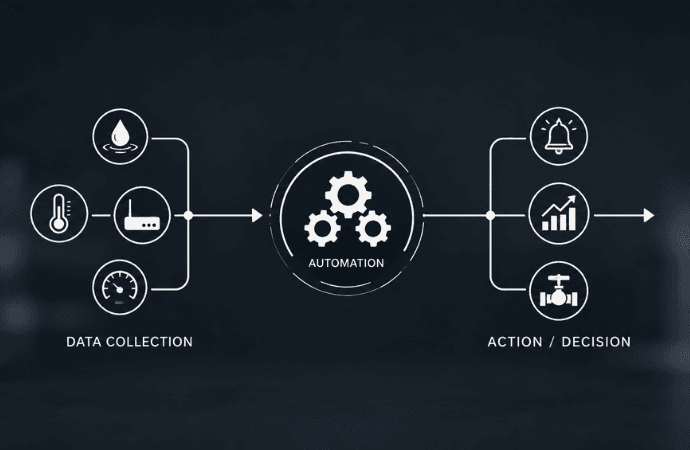
Live monitoring is the first step in any connected operation. It helps teams track assets, environments, machines, utilities, and critical conditions without depending only on manual checks. But the real value starts when this data becomes actionable. Operational intelligence helps teams identify changes, compare performance, and respond faster. It turns raw device data into practical information for daily decisions.
How thingZmate® adds intelligence?
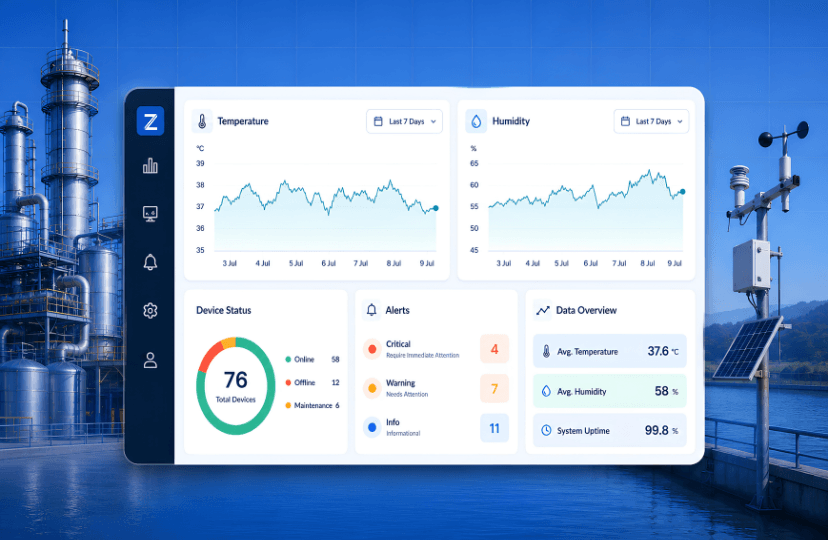
- Converts device data into meaningful dashboards
- Triggers alerts based on thresholds and events
- Shows trends across time, sites, and assets
- Generates reports for operational review
- Supports faster decisions through centralized visibility
The Role of Alerts in Faster Decision-Making
Alerts are one of the most important layers of operational intelligence. A dashboard may show that a parameter is changing. But an alert tells the right person that action is required. In industrial sites, cold chain warehouses, campuses, utilities, buildings, and agriculture operations, delays can create serious risks. These risks may include downtime, wastage, safety issues, energy loss, or service disruption.
Why alerts matter?
Smart alerts help teams respond before a small issue becomes a larger operational problem. They can be based on device status, threshold limits, event rules, schedules, or abnormal conditions. This makes monitoring more proactive and less dependent on continuous manual observation. Alerts help teams focus on the conditions that need immediate attention.
Reports and Trends Turn Data into Operational Memory
Every connected system produces data continuously. But if that data is not reviewed, compared, and summarized, it becomes difficult to understand performance over time. Reports and trends help businesses create operational memory. They show what happened, how often it happened, where it happened, and whether improvement is visible.
What reports and trends help teams understand?
- Repeated threshold violations
- Site-wise performance differences
- Asset usage patterns
- Energy or resource consumption behavior
- Compliance and audit-ready summaries This helps managers make decisions based on evidence, not assumptions.
Multi-Site Visibility for Connected Operations
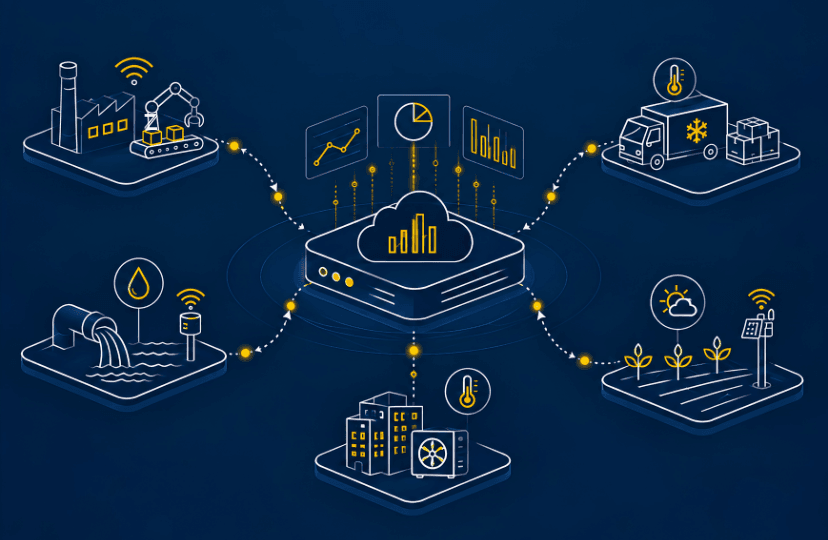
- View multiple warehouses, campuses, branches, factories, farms, buildings, or utility points from one place
- Compare performance across different sites and assets
- Identify exceptions without waiting for manual updates
- Prioritize action based on site-level conditions
- Improve coordination between central teams and field teams
- Reduce dependency on scattered reports and calls
- Give leadership better visibility across operations
- Support faster decisions across distributed infrastructure
- Build a more connected and transparent operating model
Asset Insights and User Roles Improve Control
Asset insights help teams understand device performance, asset status, and abnormal activity without depending on manual checks.
Smarter asset-level visibility
- Track device and asset performance
- Identify inactive or abnormal assets
- Review current and historical status
Better user control
- Assign access based on team roles
- Give teams relevant asset visibility
- Support faster operational decisions
Moving Beyond Dashboards with thingZmate®
Dashboards are important, but they are only one part of a connected platform. The future of IoT is not just real-time monitoring. It is intelligent, connected, and decision-focused operations. With thingZmate® businesses can connect devices, monitor critical parameters, configure alerts, analyze trends, generate reports, manage users, and gain better visibility across assets and sites. This shift helps organizations reduce manual dependency, improve response time, and make operations more data-driven. For industries, buildings, campuses, utilities, agriculture, and cold chain environments, operational intelligence is the next step after IoT monitoring.
Table of Contents
- The Shift from IoT Monitoring to Operational Intelligence
- Why Basic Monitoring Is No Longer Enough?
- From Live Data to Actionable Intelligence
- The Role of Alerts in Faster Decision-Making
- Reports and Trends Turn Data into Operational Memory
- Multi-Site Visibility for Connected Operations
- Asset Insights and User Roles Improve Control
- Moving Beyond Dashboards with thingZmate®
Keep Exploring Our Blog Collection
© 2026, Enthu Technology Solutions India Pvt. Ltd. All Rights Reserved.