Balancing Rice Bowls and Climate Goals: Carbon Credit in India’s Paddy Fields

Table of Contents
- Carbon Credits for Climate-Smart Paddy Farming
- The Methane Dilemma in India’s Rice Paddies
- A Greener Path with Smart AWD Solutions
- Unlocking Value Through Paddy Carbon Credits
- How Carbon Credits from Paddy Farming Work
- Overcoming Hurdles with Agritech Innovation
- The Dual Dividend: Amplified by Technology
- The Path Ahead
Carbon Credits for Climate-Smart Paddy Farming
Carbon credits in India’s paddy fields could connect sustainable rice cultivation with measurable climate action and additional value for farmers. By combining improved water management, field-level sensors and digital reporting, rice growers can reduce methane emissions while protecting food production and water security.
The Methane Dilemma in India’s Rice Paddies
India is one of the world’s largest rice-producing countries, making paddy cultivation essential to food security and rural livelihoods. However, continuously flooded fields create oxygen-deficient soil conditions that support methane-producing microorganisms. Reducing rice methane emissions without affecting crop yield is therefore a major agricultural and climate priority.
- Continuous flooding encourages methane formation in paddy soil.
- Conventional irrigation consumes large volumes of water.
- Excess pumping can increase electricity or diesel expenses.
- Manual water-level decisions may cause over-irrigation.
- Climate-friendly practices must also protect farmer productivity.
A Greener Path with Smart AWD Solutions
Alternate Wetting and Drying allows a paddy field to dry to a controlled level before irrigation resumes. This interrupts continuous anaerobic conditions, helping reduce methane emissions and irrigation demand. Smart monitoring improves AWD by giving farmers timely and accurate field-water information.
Climate-Smart Rice Cultivation Methods
- Smart AWD: Sensors track field-water levels and support timely irrigation.
- Direct-Seeded Rice: Reduced flooding during establishment can lower water demand.
- Nutrient management: Efficient fertiliser application limits avoidable emissions and input loss.
- Residue management: Improved straw handling can reduce methane formation. The paddyAkvo® smart AWD solution demonstrates how IoT sensors, wireless communication and analytics can support controlled paddy-field irrigation.
Unlocking Value Through Paddy Carbon Credits
Sustainable rice practices can create measurable emission reductions that may qualify for carbon finance when they meet an approved methodology. India’s Carbon Credit Trading Scheme includes an offset mechanism for eligible voluntary greenhouse-gas reduction projects.
India’s Rice-Cultivation Methodology
The Bureau of Energy Efficiency has approved BM AG04.002 for improved rice-cultivation practices. It covers measures that reduce anaerobic decomposition in rice soils, including intermittent flooding, AWD and selected direct-seeding practices. Credit issuance still depends on eligibility, additionality, monitoring, validation and independent verification.
How Carbon Credits from Paddy Farming Work
A paddy carbon-credit project compares emissions under the previous cultivation practice with emissions after an approved low-carbon practice is introduced. The verified difference, expressed in carbon-dioxide equivalent, can support the issuance of carbon-credit certificates under the applicable programme.
Typical Carbon-Credit Process
- Establish the baseline cultivation and irrigation practice.
- Define eligible fields, farmers and project boundaries.
- Implement AWD or another approved rice-management method.
- Record irrigation, crop, field and operational data.
- Validate and verify the calculated emission reductions. Digital records can make project evidence more consistent and traceable. The UNFCCC rice water-management methodology also demonstrates the importance of defined baselines, monitoring procedures and verifiable field practices.
Overcoming Hurdles with Agritech Innovation
Barriers and Technology Responses
- Small and fragmented farms: Farmer Producer Organisations can aggregate multiple fields under a coordinated programme.
- Inconsistent AWD implementation: Field sensors can show when irrigation should stop or restart.
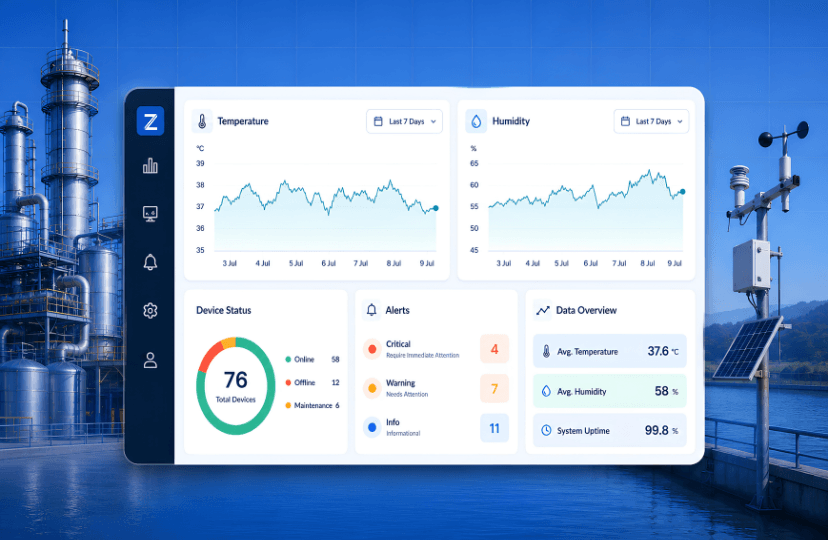
- Complex record-keeping: The thingZmate® AIoT platform can centralize device data, trends and alerts.
- Weak field evidence: Time-stamped water-level records can strengthen digital Measurement, Reporting and Verification.
- Limited technical support: Smart agritech solutions can combine devices, connectivity, analytics and farmer guidance.
The Dual Dividend: Amplified by Technology
Value for Farmers and Project Developers
Technology-driven AWD programmes can improve irrigation visibility while generating the field evidence required for high-integrity carbon projects. However, sensor data alone does not guarantee credits; the project must comply with the selected methodology and verification requirements.
Tangible Benefits for Stakeholders
- Farmers can reduce unnecessary irrigation and pumping costs.
- Controlled drying can support lower paddy methane emissions.
- Project developers receive structured data for digital MRV.
- Buyers gain access to more transparent emission-reduction evidence.
- India advances sustainable agriculture and climate commitments.
The Path Ahead
- Prioritise paddy regions with reliable irrigation and suitable drainage conditions.
- Deploy smart AWD through FPOs, cooperatives and organised farmer groups.
- Connect field sensors to secure monitoring and reporting platforms.
- Follow approved methodologies from project design through verification.
- Scale successful pilots using public-private partnerships and documented outcomes.
Table of Contents
- Carbon Credits for Climate-Smart Paddy Farming
- The Methane Dilemma in India’s Rice Paddies
- A Greener Path with Smart AWD Solutions
- Unlocking Value Through Paddy Carbon Credits
- How Carbon Credits from Paddy Farming Work
- Overcoming Hurdles with Agritech Innovation
- The Dual Dividend: Amplified by Technology
- The Path Ahead
Keep Exploring Our Blog Collection


© 2026, Enthu Technology Solutions India Pvt. Ltd. All Rights Reserved.