Hidden Threats in Hatcheries: The Overlooked Role of Temperature and Humidity

Table of Contents
- Why Does Hatchery Climate Control Demand Precision?
- The Scale of India’s Poultry Industry
- Understanding the Science Behind Incubation
- Where Does Manual Monitoring Create Gaps?
- The Financial Cost of Environmental Inaccuracy
- Introducing Smart Hatchery Monitoring
- Turning Hatchery Data into Better Decisions
- Building a Sustainable Hatchery Future
Why Does Hatchery Climate Control Demand Precision?
The success of a poultry hatchery depends on maintaining stable temperature, humidity, airflow and ventilation. These invisible conditions influence embryo development, moisture loss, hatch timing and chick quality. Reliable hatchery temperature and humidity monitoring helps operators detect small deviations before they affect an entire production batch.
The Scale of India’s Poultry Industry
India’s poultry sector supports food security, rural livelihoods and agricultural growth. The country produced an estimated 149.11 billion eggs during 2024–25, making consistent chick production increasingly important for the expanding poultry value chain.
Seasonal heat, humidity and changing room conditions can make poultry hatchery climate control difficult. Even small environmental variations can affect multiple batches when they remain undetected.
Why Consistent Hatchery Conditions Matter?
- Stable conditions support uniform embryo development.
- Early alerts reduce the duration of harmful deviations.
- Historical records improve batch-to-batch comparison.
- Zone-level monitoring reveals uneven heat or airflow.
- Reliable data supports better production planning.
Understanding the Science Behind Incubation
Embryo development depends on stable temperature, humidity, airflow and ventilation. Temperature supports growth, while humidity controls moisture loss through the eggshell.
Critical Incubation Conditions
- Air temperature: Supports embryo development.
- Relative humidity: Regulates moisture loss.
- Airflow: Prevents localised heat pockets.
- Ventilation: Supports heat removal and gas exchange.
Forced-air incubators commonly operate near 37.8°C, with humidity around 58%–60% during setting and higher levels during hatching. Exact values should follow breeder and equipment guidelines. Mississippi State University Extension provides further incubation guidance.
Where Does Manual Monitoring Create Gaps?
Many hatcheries still depend on periodic checks, visual inspections and handwritten records. These methods capture conditions only at the time of inspection and may miss temperature increases, humidity drops or equipment faults occurring between checks.
Common Monitoring Challenges
- Delayed detection of environmental deviations.
- Missing readings during nights and shift changes.
- Limited visibility across different incubator zones.
- Incomplete historical data for analysis.
- Dependence on incorrectly placed or uncalibrated sensors.
Without continuous incubation environment monitoring, teams may know that a problem occurred but struggle to identify when it started, how long it lasted or which area was affected.
The Financial Cost of Environmental Inaccuracy
A small decline in hatchability can create a measurable commercial impact. For example, a two-percentage-point reduction in a batch of 10,000 eggs represents 200 fewer chicks before accounting for fertility and egg quality.
Environmental instability can also lead to uneven hatch timing, additional labour, longer equipment operation and repeated maintenance checks. Precise climate management therefore supports both biological consistency and operational efficiency.
Introducing Smart Hatchery Monitoring
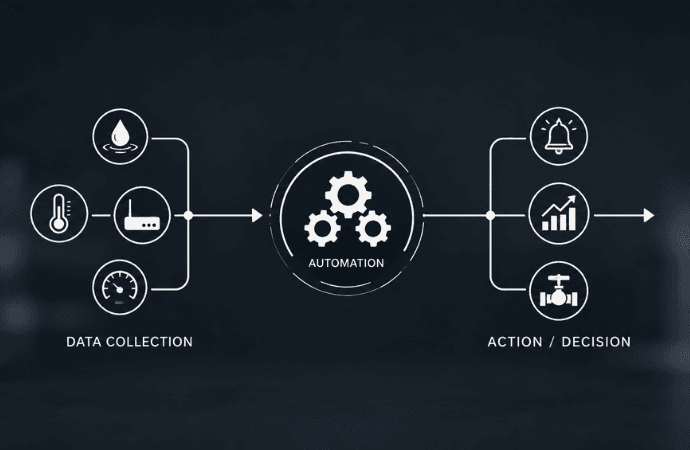
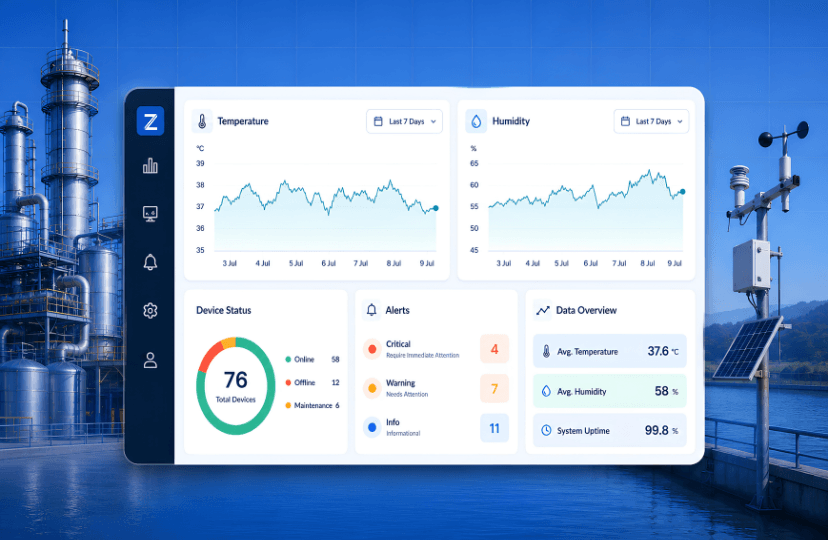
An IoT hatchery monitoring system continuously collects temperature and humidity data from egg-storage rooms, setters, hatchers and chick-holding areas. Readings are sent to a central platform where operators can monitor live conditions, review trends and receive alerts.
Core Smart Monitoring Capabilities
- Continuous temperature and humidity measurement.
- Real-time hatchery alerts for threshold deviations.
- Historical graphs for batch and machine comparison.
- Centralised monitoring across multiple rooms.
- Digital records for maintenance and reporting.
The thingZmate® AIoT platform connects field devices with dashboards, analytics and real-time notifications. Its centralised monitoring capabilities can help hatchery teams identify changing conditions and respond faster.
Turning Hatchery Data into Better Decisions
Historical environmental data helps operators move beyond isolated readings and understand recurring patterns across production cycles.
- Compare conditions between setters and hatchers.
- Identify humidity variations during specific shifts.
- Detect zones affected by uneven heating or airflow.
- Relate environmental changes to hatch timing.
- Plan maintenance using recurring equipment trends.
The EnthuTech automated poultry farming case study demonstrates the use of IoT-enabled temperature and humidity sensors, distributed monitoring nodes and continuous visibility in poultry environments.
Building a Sustainable Hatchery Future
Smart hatchery monitoring supports productivity, energy efficiency and chick welfare by helping teams detect unstable heating, ventilation and humidification.
A Practical Implementation Approach
- Install calibrated sensors at critical monitoring points.
- Define separate limits for storage, setters and hatchers.
- Configure warning and critical alerts.
- Review environmental trends after each batch.
Hatcheries can explore EnthuTech’s AgriTech and Livestock solutions for connected monitoring and data-driven poultry management.
By combining sensors, automated alerts and the EnthuTech AIoT platform, hatcheries can move from periodic checks to continuous climate monitoring.
Table of Contents
- Why Does Hatchery Climate Control Demand Precision?
- The Scale of India’s Poultry Industry
- Understanding the Science Behind Incubation
- Where Does Manual Monitoring Create Gaps?
- The Financial Cost of Environmental Inaccuracy
- Introducing Smart Hatchery Monitoring
- Turning Hatchery Data into Better Decisions
- Building a Sustainable Hatchery Future
Keep Exploring Our Blog Collection


© 2026, Enthu Technology Solutions India Pvt. Ltd. All Rights Reserved.