How Flexible IoT Monitoring Platforms Support Different Solution Needs?

Table of Contents
- The Need for Flexible IoT Monitoring
- Different Solutions, Different Monitoring Logic
- Flexibility at the Platform Level
- Context Gives IoT Data Meaning
- thingZmate® Across Different Monitoring Needs
- Limits of a Fixed Monitoring Platform
- Core Capabilities to Look For
- Building Around the Solution with thingZmate®
The Need for Flexible IoT Monitoring
An IoT monitoring platform should do more than collect sensor data and display it on a standard dashboard. Every monitoring solution has different parameters, priorities, users and conditions that require attention. Energy teams may focus on consumption and demand, while cold chain teams may focus on temperature excursions. Water monitoring may prioritise level and flow, while HVAC monitoring may combine temperature, humidity and energy. A fixed monitoring experience therefore cannot serve every IoT solution equally well. With thingZmate®, dashboards, alerts, analytics, reports and rules can be configured around different monitoring requirements. The platform can remain consistent while the way information is presented and used changes with the application. The goal is to let the platform adapt to the solution rather than forcing the solution to fit the software.
Different Solutions, Different Monitoring Logic
The same platform can receive data from meters, temperature sensors, level sensors, pressure transmitters and environmental sensors. What changes is how that data needs to be interpreted, presented and acted upon in each application. A flexible IoT monitoring platform should support these differences without requiring separate software for every solution.
- Industrial IoT monitoring may focus on energy, equipment and utility parameters.
- Cold chain monitoring may focus on temperature, humidity and excursions.
- Water monitoring may focus on level, flow, pressure and consumption.
- HVAC monitoring may combine temperature, humidity, energy and operating conditions.
- AgriTech monitoring may combine soil, weather and irrigation data.
- Environmental monitoring may focus on weather, air quality and historical trends.
- Smart building monitoring may combine energy, water and environmental data.
- The monitoring logic should follow the requirement of each solution.
Flexibility at the Platform Level
Configurability is more than moving widgets around a dashboard. A useful IoT monitoring platform should allow devices, parameters, alerts and reports to work around the actual monitoring objective. thingZmate® provides a common platform environment while allowing different applications to use that environment differently. This creates flexibility without adding unnecessary complexity for the user.
Capabilities That Enable Flexibility
- Configurable dashboards and widgets for application-specific views.
- Threshold-based alerts for conditions that need attention.
- Rule-based actions for predefined responses to selected events.
- Analytics and historical trends for reviewing changes over time.
- Device and user management for organising connected assets and platform access.
Context Gives IoT Data Meaning
A temperature reading is only a number until the application gives it context. In cold chain monitoring, it may indicate whether storage conditions remain within an acceptable range. In HVAC monitoring, the same reading may be viewed alongside humidity, energy consumption and equipment conditions. In agriculture or weather monitoring, temperature may form part of a wider environmental picture.
From Raw Data to Relevant Information
The platform should associate incoming data with the correct device, asset, location, threshold and user. It should allow the same parameter to be presented differently depending on what the application needs to understand. thingZmate® can structure dashboards, alerts and reports around this application-specific context. The same principle applies to pressure, flow, energy, humidity and other monitored parameters. The platform turns generic sensor values into information that is relevant to the actual solution.
thingZmate® Across Different Monitoring Needs
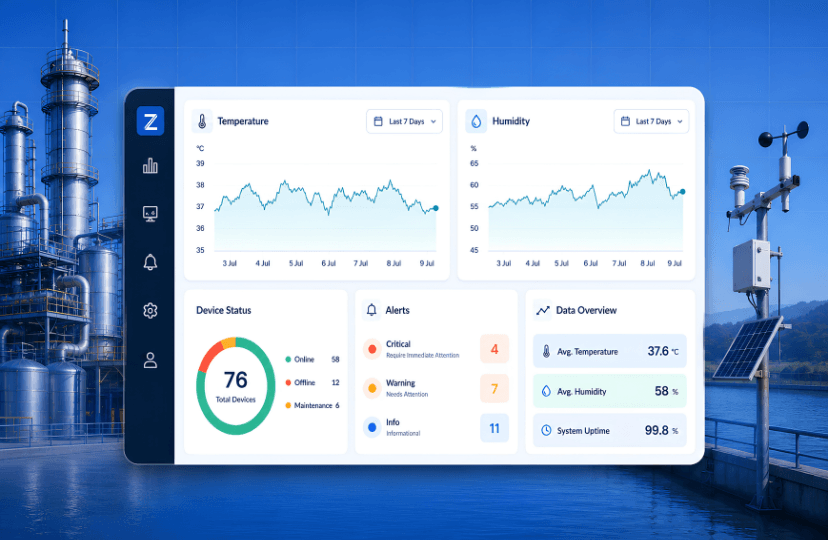
thingZmate® acts as the platform layer between connected devices and the users who need to understand their data. Its core capabilities can support energy, water, cold chain, HVAC and other monitoring requirements. Dashboards, thresholds, alerts and reports can then be configured according to the purpose of each deployment. This keeps the platform familiar while allowing the monitoring experience to change with the application.
From Device Data to Application-Specific Monitoring
- Organise devices and parameters according to the application.
- Build dashboards around the information that matters to the user.
- Configure alerts around defined thresholds and conditions.
- Use rule-based actions where a predefined response is required.
- Analyse historical data and generate application-relevant reports. The result is one platform foundation supporting different monitoring experiences. The role of rules and automation is explored further in EnthuTech AIoT's IoT automation article, while AWS IoT Rules provides an external reference on condition-based IoT actions.
Limits of a Fixed Monitoring Platform
- The same dashboard layout for every IoT application.
- Every available sensor parameter on the main monitoring view.
- Identical threshold logic across unrelated solutions.
- The same alert priority for every monitored event.
- A fixed reporting format regardless of application needs.
- One view for users with different responsibilities.
- Repeated manual checking when alerts can highlight exceptions.
- Separate software platforms only because monitored parameters are different.
Core Capabilities to Look For
An IoT Monitoring Platform Should Support
- Configurable dashboards and widgets for different monitoring requirements.
- Alerts based on defined parameters, limits and conditions.
- Historical trends and analytics for reviewing changes over time.
- Reports for operational review and data sharing.
- Device management for sensors, gateways and connected assets.
- User management for different roles and access requirements.
- Mobile and map views where remote or location-based monitoring is required.
- Rule-based actions that reduce dependence on continuous manual observation.
Building Around the Solution with thingZmate®
One Platform Foundation, Different Experiences
thingZmate® brings device data, dashboards, alerts, analytics, reports and rule-based actions into one platform environment. How those capabilities are used can change according to the monitoring requirement of each solution. This allows the platform to remain consistent without forcing energy, water, cold chain or HVAC applications into the same workflow. For broader platform context, see EnthuTech AIoT's cloud-based IoT article.
Different Solutions in Practice
- Energy monitoring can prioritise consumption, demand, trends and alerts.
- Cold chain monitoring can prioritise temperature conditions, excursions and historical records.
- Water monitoring can prioritise level, flow, pressure and consumption.
- HVAC monitoring can combine temperature, humidity, energy and operating conditions.
- Agriculture monitoring can structure views around soil, weather and irrigation parameters.
Table of Contents
- The Need for Flexible IoT Monitoring
- Different Solutions, Different Monitoring Logic
- Flexibility at the Platform Level
- Context Gives IoT Data Meaning
- thingZmate® Across Different Monitoring Needs
- Limits of a Fixed Monitoring Platform
- Core Capabilities to Look For
- Building Around the Solution with thingZmate®
Keep Exploring Our Blog Collection
© 2026, Enthu Technology Solutions India Pvt. Ltd. All Rights Reserved.